

April 17, 2018 Interview with Literary Agent Kira Watson of Emma Sweeney Agency
About Kira:
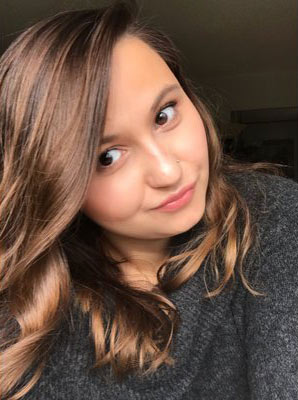
Kira Watson is ESA Rights Manager. She began working at ESA as an intern in 2014 and now oversees subsidiary rights in addition to building her own YA and MG list. She graduated from Hunter College with a BA in English (with a focus on Creative Writing) and a BA in Russian Language & Culture. Kira is actively seeking YA and MG books with a strong narrative voice, well-crafted storylines, and memorable characters. Stories with folklore elements, complex villains, morally enigmatic (and very flawed) protagonists, medieval literature influences, and taboo subjects are bound to catch Kira’s attention. KIra is also seeking Picture Books that explore introduce readers to new ideas, play with language, and explore the world in a new and exciting way. In May, Kira will be attending the EPA SCBWI Pocono Retreat
How to connect with Kira:
Submissions: queries@emmasweeneyagency.com
Twitter: @KiraMWatson
Instagram: @kwatsonreads
What is your role at the Emma Sweeney Agency?
Rights Manager and Agent
Where are you based?
NYC on the Upper East Side
How and why did you become an agent?
The HOW: I originally planned to be an international adoption lawyer and that was what I was working my way up to in college, but I LOVED reading and needed an excuse to keep reading YA/MG, so I created a book review blog. Soon, before I knew it, I was reading books/writing reviews instead of paying attention to my Poli-Sci lectures. One day, during one of these lectures, I started to consider what would happen if I changed majors and worked—in some capacity—with books. I was only beginning my sophomore year and I wasn’t that far along with my Poli-Sci requirements, so the idea of becoming an English major didn’t seem so crazy. But, before I did anything, I wanted to make sure I can get my foot in the door of the publishing world. Once again, instead of paying attention to my lectures, I was emailing publishing houses and agencies to see if they had any internship openings. I got a few responses, landed a few interviews, and eventually settled down at ESA as a spring intern. Well, that ten-week internship turned into a summer internship, which then turned into a part-time job while I finished college. The more I learned about publishing and agenting, the more I knew I wanted to be a part of this world and to work with my own clients.
The WHY: I love books. I’m sure many agents/edits give you the same answer, but it’s true. I don’t think a person can last in this industry without loving books. I also love working with authors and figuring out ways to improve their manuscripts and help them grow as writers.
What’s a day in the life of literary agent Kira Watson like?
Every day is different. Some days I may be preparing to go out on submission so I spend time researching and compiling a list of editors, drafting a pitch/feeler email, and making calls. Other times, I’m going through revisions, following up on submissions, following up on contract/deal related matters, corresponding with authors/editors, and handling the general office tasks. Contrary to popular belief, most of my reading (and editing) is done outside of office hours, usually on weekends or when I’m commuting home.
Since I’m also handling rights for ESA, I spend a good chunk of time tracking foreign contracts, updating scouts/co-agents, finalizing deals, and handling foreign tax documents.
What are you currently looking for?
In YA, I’d love to see more contemporary fiction that has emotional heft, more #UpLit fiction, sibling stories, and unconventional love stories (not the swoony-mushy type, tho).
In MG, I’d love to see more adventure stories that feature a cast of characters and explore friendships. I’d also love more sibling stories.
In Picture Books, I’m looking for voice driven stories that explore people/cultures/ideas we don’t see all the time.
What do you look for in pbs, mg, and ya?
Voice and a strong concept.
When a writer’s querying you with picture books what more do you request from them if you’re interested in potentially working with them?
Three things: the pitch for their picture book, the text for the picture book, and a bio.
What’s something you’re looking for and not getting that you would love to see in your slush pile?
More picture books.
Things you’re definitely not the right fit for?
Mushy romance stories.
What’s something you’ve recently sold that you’re especially excited about?
AFTERIMAGE by Naomi Hughes.
I was immediately smitten with Naomi’s writing and her ability to portray Cam, the story’s protagonist who has a panic disorder and struggles with panic attacks throughout the story, with such rawness and honesty. Naomi shows readers that you can be a hero no matter what the world or your own body throws at you.
What would be your dream project? Dream big!
This is SUPER specific, but I would love to have a YA manuscript that takes place in the 90s and focuses on a young woman trying to make it as a singer in the metal industry.
Does your wish list depend on what you already represent, your current reading interests, the demands of the market, or a mixture?
It’s a mixture of everything.
Are you an editorial agent?
Yes!
What makes a successful author-agent relationship?
In order to have a successful author-agent relationship it’s important to have three things:
- Similar editorial visions/goals—if the agent and author don’t share the same vision for the project then they’ll spend a lot of time butting heads and get very little accomplished.
- Understanding of boundaries—This should be self-explanatory, but sometimes people forget that agents are people with lives outside of publishing. Just like everyone else, we need time to recharge. So, emailing to check in on a manuscript a week after sending it to your agent or sending a panicked email on a Sunday night may not be the best course of action.
- Respect for each other’s time—This one is in regards to revisions. If an agent sends you revisions notes (addressing big picture edits) and you turn around with a revision two days later, you’re wasting your agent’s time because there’s NO WAY you made the necessary in your manuscript and he/she will read and send you similar notes. Take your time with revisions.
What are some ways, unique to you, in which you champion your clients or hope to champion your clients?
I do my best to be there for my clients. So, if they need to set up a call to discuss their manuscript, send over chapters they’ve been working on, or if they need someone to talk to just because they’ve had a rough day, they can always shoot me an email or DM me on Twitter. I tend to respond fairly quickly.
When and where do you read queries?
I don’t have a specific spot or time. I read a lot while commuting, on the weekends, and occasionally while I’m doing my cardio warm up at the gym. Mostly, I read queries whenever I can find some time away from any distractions so I can focus and give each query the attention it deserves.
What’s something you wish you saw more of or done more effectively in the query letters you receive?
I see a lot of “fluff” information overtaking query letters. For example, an author going into a long explanation about the inspiration for their manuscript or an author giving me their entire life history (“I’ve been writing for as long as a can hold a pencil. Things like this take away from the “meat” (in this case the pitch for the manuscript) and waste agent’s reading time. So, I guess I’m trying to say that I want to see more concise query letters that have a brief into, followed by a strong pitch (you should be able to condense that pitch into a one liner) and a brief bio.
What sets a great manuscript apart from the rest of the crowd for you?
A great manuscript has a fresh angle, emotional appeal, commercial hook, a well-developed inherent conflict, and plausibility.
What’s something about you that you wish writers knew when querying you?
When working with authors I prefer to take a more of a collaborative/guidance approach by asking questions that will, hopefully, help the author develop ideas, instead of just telling them to do X and Y in order to fix their manuscript. This works better as a learning tool and helps the author grow because it makes them think about their work in ways they may have not thought before.
When you’re interested in potentially working with a writer what tools do you employ to learn more about that writer?
I really like getting on the phone with a writer for a brief chat because it allows me to gauge their response to what I’m saying, to see how well we mesh, and it also gives them a chance to ask me questions.
You’re very active on social media. What are your thoughts on social media for writers?
Social media can be a great way for writers to build relationships with other writers and with their readers.
What’s your definition of diversity and what does diversity mean to you?
Diversity for me goes beyond race and sexuality. It’s about including people and stories of different backgrounds and experiences and making them available for readers.
How do you approach and encourage diversity?
I do my best to find authors of diverse backgrounds, as well as buy/read books from diverse authors.
Do you receive many submissions from diverse authors?
Yes, I do, but am always open to more.
What are some ways you feel literary agents can increase diversity in publishing?
Encourage writers of different races, sexualities, religions, and various backgrounds to tell their stories.
Advice for writers who are crafting diverse characters?
Get beta readers/sensitivity readers, write from an authentic place, and if you’re writing outside of what you know—do your research + get reads from people who will be able to give you honest feedback that will help you craft a genuine character.
Are there any upcoming conferences or twitter events you’ll be participating in?
Yes! I’ll be at the EPA SCBWI Pocono Retreat in May J I’m really looking forward to meeting new writers and enjoying the, hopefully, warm and sunny weekend while talking about writing.
You offer editorial services, correct? Can you tell us more about that?
I do! I recently launched the website (https://kiramwatson.wixsite.com/kmweditorial)and am hoping to focus on YA/MG for the time being. I enjoy working with writers and editing, so, while I know I cannot sign every single person that queries me as a client, I can still help them with their manuscripts.
Any final advice for writers seeking an agent?
Get yourself a beta reader or a critique partner who will read your manuscript and provide feedback. Don’t rely on family members/friends for stuff like this. Instead, I recommend finding another writer (someone you trust) to do this. They’ll have a better understanding of what to look for when reading your manuscript and can provide constructive criticism that will help you improve your manuscript and grow as a writer.
Wildcard Round:
What would be your spirit animal and why?
I know there’s a joke going around that an agent should be a shark, but I’d say I’m more of a wolf. Wolves are intelligent, loyal, and have powerful instincts/intuition. Wolves are also non-aggressive unless provoked, which applies to me 100%.
What are your top five television shows?
- Stranger Things
- Supernatural
- How I Met Your Mother
- Weeds
- Hart of Dixie
Favorite Twitter hashtag everyone should go check out right now (after this interview of course)?
#novelaesthetic
If you could have any career (outside of publishing) what would it be and why?
If I were not an agent, I would love to do something within fitness/nutrition industry. There’s a lot of really misleading/ false information (i.e., crash diets, “carbs are bad” claims, “can’t eat after 6 pm,” fit teas, bulletproof coffee, fitness wraps, carb blockers, etc.) circulating out there about nutrition and fitness and it’s getting out of hand. It’s a contributing factor to the obesity issue in the US. So if I could have some impact to help change that by educating people, I’d be a pretty happy camper.
Thanks for your time, Kira!
Sorry, the comment form is closed at this time.