

August 26, 2019 Interview with Agent, Victoria Doherty-Munro
I’m pleased to welcome to the blog this week, agent, Victoria Doherty-Munro. Be sure to check out the giveaway at the end of the interview!
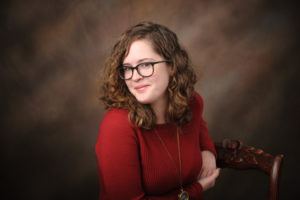 About Victoria:
Victoria Doherty Munro started at Writers House as an intern in 2010 and, after graduating from Wellesley College with a degree in English, was hired as the assistant to senior agent Daniel Lazar in 2012. She began building her own list in 2015 and represents middle grade, young adult, and adult authors.
Connect with Victoria:
Twitter: @toriedm
What’s your title at Writers House?
I’m a junior agent!
For those who may not know, would you share your journey with us of how you became an agent at Writers House.
I became interested in the publishing industry in general when I was a sophomore in college and I was in a bookstore near my college campus perusing the books (as I did at least once a week) and thought “wait a second, people work on these for a living…I could do that!” It was something I’d always been vaguely aware of, but that was a real lightbulb moment for me and it became the goal. I got an internship at Writers House a year later and absolutely loved it, and, after I graduated college and had another internship at an agency in Boston, was hired as an assistant here.
What’s a day in the life of literary agent Victoria Doherty Munro like?
It really depends on the day! I always devote a decent chunk of the day to emails, but aside from that I could be writing up editorial notes for a client or potential client, responding to queries or submissions, reviewing contracts, working on a pitch or sending out a project to editors – or even, occasionally, something totally unexpected like rearranging bookshelves! And then in the evening, I usually spend a few hours reading – there’s almost never time for that during the workday.
What are your short and long-term goals within the publishing industry?
My short term goal is to continue to build my list of clients, taking on projects that excite me and matching them with the right publisher/editor so they can be shared with the world. And my long term goals are pretty much the same as that – I want a diverse list of clients who write books that feel fresh and compelling.
What’s your interaction like with the other agents of Writers House? Is there anyone you’ve been mentored by or work closely with?
One of the best things about Writers House is how collaborative it is, and that I work with an incredible group of agents. In addition to building my own list of clients, I assist senior agent Daniel Lazar, so I’ve been lucky enough to benefit from his expertise since 2012.
You’ve said your first summer as an intern you went from not really knowing what an agent was to being utterly fascinated by agenting. What was it that initially fascinated you? Has that changed in any way, and if so, how?
After my first internship at an agency, I was really drawn to the idea of being present for an author’s entire career. As someone who really likes editorial work, I also liked the idea of being involved early on in that process, and the idea of advocating for an author throughout their book’s entire publishing journey was also really appealing. I don’t think much about that has changed, though I obviously know a lot more of the details now!
What do you love most about working within children’s literature?
Knowing that in the hands of the right reader, the books I work on can be life-changing.
Do you perceive there to be any advantages to a writer working with a new[er] agent, and if so, what do you believe them to be?
I think there are advantages, for sure. Newer agents tend to be really hungry to take projects on, and because we have a smaller list of clients, can devote a lot of focused time and energy to each of them.
What three things are at the top of your #MSWL.
I would love a YA witch book – something in the vein of Practical Magic, for example. I’m also avidly watching the Women’s World Cup right now and was a soccer player growing up, so a YA novel centering around a soccer team is something I’d love to read.
And I’m definitely in the mood for some contemporary middle grade (that one’s really broad, I know, but I feel like I haven’t been seeing a lot of it in my inbox lately)!
12) Would you share with us what specifically in MG and YA you’re seeking. Could you provide us with some published titles similar to those you’d love to rep?
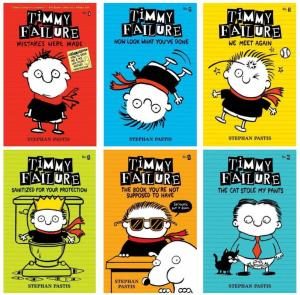
For middle grade, I love anything with heart at the center. For contemporary, I love Sharon Draper’s books. When it comes to middle grade, I gravitate to anything with heart at the center. I also love clever humor, like the TIMMY FAILURE series, and contemporary or historical stories that fully engage the reader in a world that is simultaneously familiar and new to them. And I’m always a sucker for retold fairytales, or any stories that captures the kind of classic fantasy feeling of the books I adored when I was that age – the first author I signed as a client, Alexandra Ott, does that so well with her books RULES FOR THIEVES and THE SHADOW THIEVES.
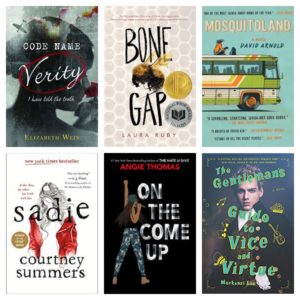 For YA, I’m looking for any book that gets at the uniquely tumultuous, confusing, and exciting experience of being a teenager, really – I want my heart to hurt at least once before the final page. I’m a huge fan of unreliable narrators and plot twists that take me so completely by surprise that I gasp out loud, and voice-driven books with writing that grabs me from page one and doesn’t let go until the end. My top three YA books of all time are probably CODE NAME VERITY, BONE GAP, and MOSQUITOLAND. More recently, I read and loved SADIE by Courtney Summers, ON THE COME UP by Angie Thomas, and THE GENTLEMAN’S GUIDE TO VICE AND VIRTUE by Mackenzi Lee.
If you were to take a client on who also writes for an audience you aren’t necessarily seeking, would you be open to repping those other manuscripts of theirs (e.g. picture books)? When and how should an author approach this?
Of course! I want to represent authors for their careers, not just for one book. If an author queries me with a project that is in a genre/for an audience I’m more actively looking to represent and I fall in love with it, I’ll definitely ask about other projects the author has written or hopes to write. It helps me to figure out if I’m the best agent for that author (for example, if you’ve written a really wonderful, voice-driven contemporary YA, but you see yourself more as a picture book author or also write a lot of really intense sci-fi, I might not be the best match for you, even if I really love your YA).
Do you read sample pages without fail or only if the query is strong?
I usually read sample pages unless the query is for a project that I know isn’t right for me (a picture book, for example). A strong query letter definitely piques my interest and will make me excited to read the sample pages, but I know that query letters are hard to perfect and I don’t want to miss out on a fantastic project because the query letter didn’t strike me quite right, so I like to give the writing a chance.
In a query letter, do you have a preference regarding whether the author first dives into the pitch or a short personalization about why they specifically chose to query you?
It doesn’t matter to me, as long as I get all the important info!
What’s your average response time to a query? To a partial or full?
I try to respond to everything – queries and requested manuscripts – within 8 weeks, though I admittedly sometimes fall behind. I don’t request partials, only fulls, mainly because I’m impatient, and if I’m excited about a project I want to keep going ASAP and not have to wait for the rest of it to land in my inbox.
In your opinion what makes for a successful author-agent relationship?
Communication, openness, and trust.
When considering a client, how do you decide whether you’d benefit a potential client by becoming their literary partner? What are you taking into consideration?
I always have a phone call with a potential client before officially offering representation – I think connecting voice-to-voice rather than just over email is really important on both sides of the equation. During that discussion, I’m considering whether we seem to be on the same page editorially and what the client wants for their career and from their agent and whether I think I’d be the best person to support them in that.
Before we get to that point, though, I’m looking for a manuscript that makes me really excited. I know I’ve found a potential client when I can’t stop reading their work and want to tell everyone about this great new project I’m reading. As I’m reading, I’m also thinking about whether I have a vision for the project and have ideas about editorial notes to suggest, how I would pitch it to editors, etc – there are definitely some projects that I really like, but for which I ultimately decide I’d be a better reader than agent. If I don’t have a really clear vision as I’m reading, I usually end up stepping aside.
What’s your communication like with clients?
My communication style totally depends on the client and what they need. Email is often easiest, especially for day-to-day stuff, but I’m always happy to get on the phone and talk things through, as well (and will often suggest it for more big-picture discussions).
Are there any upcoming conferences or twitter events you’ll be participating in?
I have historically been pretty bad at Twitter, but I’m working on getting better! So you can definitely expect me to pop into #PitMad and #DVPit in the future. And later this summer I’ll be participating in the Pitch Slam event at the Writers’s Digest conference.
Wild Card Questions
If you could compare yourself with any animal, which would it be and why?
I’d be a narwhal – I don’t really have a reason, honestly, except that up until a couple months ago I didn’t think they were real, and now I think they’re really cool. They’re the unicorns of the sea!
If you won $20 million in the lottery, what would you do with the money?
This is SUCH a boring answer, but I’d give a huge chunk of it away to charity, for sure. Then I’d buy an apartment! And my dad will be mad at me if I don’t say I would also invest whatever’s left over in a retirement fund, probably.
If you could be a superhero, what would you want your superpowers to be?
I’d want the ability to freeze time – mainly so I could take naps guilt-free.
Thanks for your time, Victoria!
Sorry, the comment form is closed at this time.