

October 24, 2019 Interview & Giveaway with Rob Sanders
I’m excited to welcome to the blog this week, author Rob Sanders!
*Rob is offering one lucky winner a 3+3+3+ critique of their picture book manuscript. He will list the three things that are working for him in the manuscript, the three things that need attention, and three suggested next steps. To enter, check out the giveaway following the interview.
About Rob:
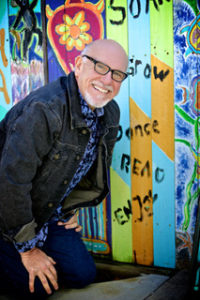 Rob Sanders is a writer who teaches, and a teacher who writes. A native of Springfield, Missouri, he has lived in Texas, Alabama, and Tennessee. After earning a B.S. in Elementary Education and a Master’s Degree in Religious Education, Rob worked for fifteen years in children’s religious educational publishing as a writer, educational consultant, trainer, editor, editorial group manager, and product developer.
In 2006, Rob moved to Florida and began working as an elementary school teacher. Soon he was serving as a district writing trainer and resource teacher. These days you’ll find him teaching second graders at Mintz Elementary School in Brandon, Florida.
Working daily with children inspired Rob to pursue his own writing career. He is the author of COWBOY CHRISTMAS, OUTER SPACE BEDTIME RACE (Crystal Kite Award), RUBY ROSE—OFF TO SCHOOL SHE GOES, RUBY ROSE—BIG BRAVOS, and RODZILLA (Florida Gold Medal for Younger Children’s Literature). Rob’s nonfiction writing includes: PRIDE: THE STORY OF HARVEY MILK AND THE RAINBOW FLAG, PEACEFUL FIGHTS FOR EQUAL RIGHTS, and STONEWALL: A BUILDING. AN UPRISING. A REVOLUTION. His latest fiction picture book, BALL & BALLOON, hit bookstores in September. Three more of his titles will release in 2020.
Rob is the co-RA for SCBWI Florida and coaches and critiques other picture book writers.
He is represented by Rubin Pfeffer.
Connect with Rob:
Rob, I’m impressed by how many hats you wear. Would you tell us about some of them and how you manage to juggle it all?
I write; teach online and face-to-face writing courses for adult writers; teach second grade in a local elementary school (after teaching fourth grade language arts for many years); provide coaching, mentoring, and critiquing services; serve as Co-Regional Advisor for SCBWI Florida; run a face-to-face picture book critique group in my area; and, just for fun, have a booth in a local antique mall that I keep stocked with treasures, curiosities, and bric-a-brac. How do I do it all? With varying degrees of success to be honest. I’ve almost loved having multiple projects going on at once and have built my life and career around that approach. My office is usually a mess, I send myself lots of emails, write lots of notes on post-its, and work hard to keep all the plates spinning!
How does your work as an educator influence your writing process, the stories you put into the world, and the way in which you connect with other creators, educators, librarians, and readers (young and “old” alike)?
Teaching school keeps me immersed in children’s literature; helps me know what books teachers have, want, and need; and lets me hear from kids on a daily what books they love and what books they can’t stand to read. I long ago stopped using my students as a test market for my story ideas. After all, most kids love their teacher, so they’re not going to be the most objective audience. But I do let my students see into my writing world. Since I teach about the writing process—planning, drafting, revising, editing, and publishing—I am able to demonstrate that in a real-world way by showing students drafts, revision notes from editors, various stages of book production (sketches, f&g’s, etc.), and then we celebrate each book release with a Book Birthday Party.
How has being a co-regional adviser for SCBWI’s Florida region influenced you and your work as an author, educator, mentor, and/or speaker?
I’m new to the role of co-regional advisor (yes, SCBWI spells that with an o, not an e), but have served in the past as the Assistant Regional Advisor for Florida and in other volunteer roles in our region. I took on this gig as a way to give back to the people and the organization that has been so instrumental to my writing career. SCBWI has allowed me to meet several of the editors I’ve ended up working with, my agent, and fellow writers, and to make life-long friends. Though I had worked as an editor for many years, I didn’t know anything about the world of children’s publishing until I joined SCBWI.
In your role as co-regional advisor ; ), is there anything you wish SCBWI members knew more about and/or took advantage of (or didn’t)?
Personally, I remind myself before each conference that I’m not attending the meeting to sell a manuscript. I’m attending to learn. I’m attending to make new connections. I’m attending so my writing will be better when I leave than when I arrived. I wish others would keep that in mind, too. In addition, I would tell folks to remember the power of listening. I’ve sold books based on what I heard editors say at conferences. I secured my agent and sold manuscripts after having critiques that didn’t go well. How? Because I listened to what people said they wanted, what they liked, what they suggested I do to make my writing better, and so on. Listening. It’s fundamental!
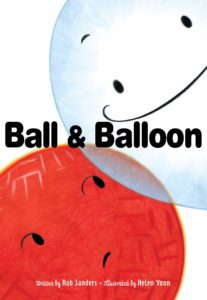 Rob, Congratulations on the debut of your newest picture book, Ball and Balloon! For those who haven’t read it, would you give us a brief pitch or synopsis?
BALLOON & BALLOON is a story about two friends—one high flying and one earthbound. It’s a story about jealousy and envy. A story about being yourself. A story about accepting your limitations. And a story about soaring high in your own unique way.
What inspired you to write it? And what, if any, were the biggest challenges crafting it?
Oh, I know exactly what inspired BALL & BALLOON. I was walking by the school media center one day as two kindergarteners came out toting their just-checked-out books. One girl dropped her books and immediately said, “I hate gravity!” I pulled out my phone and dictated that line into my notes app. Throughout the day, when I had free time, I’d pull out my phone and dictate ideas to myself—it’s a story about a ball and balloon, the ball hates gravity, balloon laughs in the face of gravity, and so on. The first draft of the story was completed by the time I got home.
How long was it from your inception of the idea to seeing your book in print?
The story went through a couple of revisions and a visit to my critique group before I sent it off to my agent. He sent it out almost immediately and it was snapped up by the first house we sent it to. From idea to acquisition, to working on revisions with an editor took about six months. The entire process from idea to published book took right at two-and-a-half years.
I saw you on your website that you critique TWO HUNDRED manuscripts a year?! What are some common problems you see within the manuscripts you receive? And what do you often prescribe as a potential solution?
Because of all the online and face-to-face teaching I’m doing these days, that number is now between 400 and 500. (Note to self—update the website.) The most common things I say in critiques are:
- The story starts here. This can indicate backstory that isn’t needed. Simple solution: Start where the action begins.
- What is the problem the character is trying to solve? This can indicate a lack of plot and character development. Simple solution: Replot using a tool like Freytag’s Pyramid or a handy-dandy graphic organizer like the one I have on my website.
- Are the adults necessary? This can indicate that adults are taking on too much responsibility and authority in the story and might be stealing the main character’s opportunity to solve his/her/their own problem. Simple solution: Kill off the adults.
- Have you tried this story in prose? Which usually means the meter and rhyme aren’t working. Simple solution: Try the story in prose.
Any tips or tricks of the trade for critiquing you’ve picked up that you wouldn’t mind sharing with us?
Just remember that old hamburger critique technique—start with a positive comment, provide constructive feedback, and end with another positive comment. No one can hear only negative input. They also have to hear what they’re doing right. And no one can change 50 things in a manuscript—focus on the most important issue or two that will make the biggest impact on a manuscript if addressed. The technique we use in our local critique group is to list what’s working, what’s not working yet, and possible solutions. By the way, one mistake I think lots of people make when critiquing is giving too line edits. Unless someone asks you to edit their manuscript stick to the broad strokes.
Three recent, consecutive releases of yours have been LGBTQ books and/or books with themes of activism and social justice. Did anything in specific influence these books releasing in succession this way?
Two more books in that category release next year: THE FIGHTING INFANTRYMAN: THE STORY OF ALBERT D.J. CASHIER, TRANSGENDER CIVIL WAR SOLIDER and MAYOR PETE: THE STORY OF PETE BUTTIGIEG. And in 2021 TWO GROOMS ON A CAKE: AMERICA’S FIRST GAY WEDDING will release.

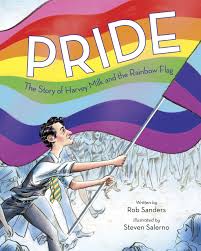 The first of the books you mentioned in your question was PRIDE: THE STORY OF HARVEY MILK AND THE RAINBOW FLAG. It was inspired the night of the SCOTUS marriage equality decision (something I never thought would happen in my lifetime). That night the White House was washed in the colors of the Rainbow Flag in celebration of the court’s decision. It was a sight most of us in the LGBTQIA+ community never even dreamed we might see. As I watched events unfold on television that night, I knew that many of students were watching, too. I knew they might have seen a Pride Flag, but they probably didn’t know its origin or what it symbolized. I wrote the first draft of that book that night. I saw it as a book of celebration. But after the 2016 elections, I realized this book and others like it were books of necessity and that rights won could be rights lost. I consciously decided that I could contribute to the canon of children’s picture books by creating works that celebrated my community and that spoke about things important to me—like peaceful protest which was celebrated in PEACEFUL FIGHTS FOR EQUAL RIGHTS.
Do you perceive there to be any additional challenges to crafting LBGTQ stories for picture books versus books for other audiences e.g. middle grade, YA, etc., and if so do you have any tips, tricks, and/or advice for working through them ?
The challenge is to write books that are authentic to you and your experience. While I can do extensive research about any topic in the world, the topics I feel most passionately about are ones to which I personally connect. I think that kind of connection and passion also ends up making a difference for readers. My only tip is to ask yourself, “Why am I writing this book? Why me? Why now? What difference could this book make?” Your answers to those questions might move you closer to writing authentically and passionately. By the way, I think this is just as true for fiction as it is for nonfiction.
What do you feel are the added benefits, if any, of doing school visits with LGBTQ books or books in general that give a voice to marginalized communities (especially those with themes of activism and social justice)?
Because I’m a school teacher, I’m not usually able to get out to do school visits. (I’m visiting school every day—but in my classroom!) However, my books can visit classrooms every day whether I’m there or not. Every child needs to see himself/herself/themself in a book. They need to see others who are not like them in books, too. And they need books that will one day help them step from who they are to who they are becoming. They need to have an enlarged world view. In other words, as Rudine Sims Bishop said years ago, books can be mirrors, windows, and sliding glass doors for children.
I’ve been asked many times why I write controversial books. I don’t consider history controversial. To me, not teaching history would be controversial.
To piggyback off the previous questions, what might be some of the challenges an author might face and/or should be prepared to face? Any advice for them?
No matter what you write, not everyone is going to love it or appreciate it. Every year books are challenged, banned, and taken out of schools. Some schools might not invite someone to speak who has written about LGBTQIA+ topics or hide their books from book fair shelves (if those books every make it to book fair shelves) or try to censor what an author talks about in a school visit. But there are also schools, districts, and entire states that embrace authors from our community and our books. Bottomline—I’m not in control of what others do with my books. All I can do is to write honestly, passionately, and accurately and then be a positive representative of my community and of my writing.
You mentioned you’re offering a course on crafting LGBTQ books. Tell us more about that [feel free to share a link here]
Lesléa Newman and I will be leading WRITING THE RAINBOW: CRAFTING PICTURE BOOKS WILL LGBTIA+THEMES at the Highlights Foundation October 28-30—just a few days from now. We hope this will become an annual event. The workshop will help participants:
- Understand the needs of the diverse LGBTQIA+ community
- Discover the importance of mirrors and windows in children’s books
- Analyze current and historical picture books with LGBTQIA+ themes and topics
- Identify topics that need to be addressed in LGBTQIA+ themed picture books
- Explore tools of storytelling for both fiction and nonfiction picture books
- Examine how to turn story ideas into books that children will love
- Learn tools for revision
- Hear from an editor about the submission process and LGBTQIA+ needs in the market
- Receive critique on a full picture book manuscript
You can learn more about WRITING THE RAINBOW at https://www.highlightsfoundation.org/programs/1494/writing-the-rainbow-crafting-picture-books-with-lgbtqia-themes-2019/.
What, if any, other events will you be participating in?
I invite everyone to join us for our SCBWI Florida Regional Conference in Miami, January 17-19, 2020. We have an unbelievable line-up of presenters. Learn more at www.florida.scbwi.org.
I’ll also be teaching two six-week long online class for The Writing Barn in 2020. Registration is now open for both.
PERFECTING THE PICTURE BOOK I
Tuesday, February 4-Tuesday, March 10, 2020
http://www.thewritingbarn.com/class/perfecting-picture-book-i-online-rob-sanders/
PICTURE BOOK BIOGRAPHIES—STYLE AND SUBSTANCE
Monday, April 6-Monday, May 11, 2020
http://www.thewritingbarn.com/class/perfecting-picture-book-i-online-rob-sanders/
Thanks for your time, Rob!
Sorry, the comment form is closed at this time.