

March 20, 2019 Interview and Giveaway with Megan & Jorge Lacera, Creators of Zombies Don’t Eat Veggies!
Today, I’m honored to welcome to the blog, husband-wife team, Jorge and Megan Lacera of Studio Lacera. Be sure to check out the giveaway that follows the interview. They’re offering a picture book critique to one lucky winner. They’ll also throw in a critique of your dummy if you’re an author-illustrator.
ABOUT JORGE AND MEGAN:
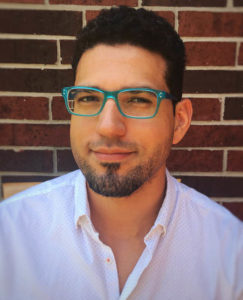 Jorge Lacera was born in Colombia, and grew up in Miami, Florida, drawing in sketchbooks, on napkins, on walls, and anywhere his parents would let him. After graduating with honors from Ringling College of Art and Design, Jorge worked as a visual development and concept artist at American Greetings, Irrational Games and Ghost Story Games. As a big fan of pop culture, comics, and zombie movies, Jorge rarely saw Latino kids as the heroes or leads. He is committed to changing that, especially now that he has a son.
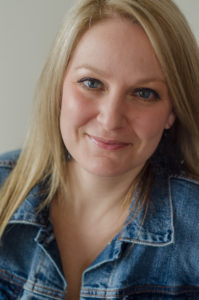 Megan Lacera grew up in the suburbs of Cleveland, Ohio, with a book always in her hands. She became a writer and creator of characters and worlds for entertainment companies like American Greetings, Hasbro and GoldieBlox, and later formed her own creative company, Studio Lacera, with husband Jorge Lacera. After reading many stories to their son, Megan realized that very few books reflected a family like theirs—multicultural, bilingual, funny, and imperfect. She decided to change that by writing her own stories.
Megan and Jorge live in Cypress, Texas with their son, Kai.
CONNECT WITH JORGE AND MEGAN:
Twitter:
@MeganLacera
@JLacera
Instagram: @Jlacera
Facebook: @MeganandJorgeLacera
Website: http://www.studiolacera.com
I’m excited to welcome to the blog today, the super talented husband-wife team, Megan and Jorge Lacera! Thanks for stopping by!
Thanks for having us, Justin! We’re excited to chat with you. Congrats on all you’ve been up to…acting, writing, blogging, #Pbchat-creating…you are multi-talented!
Likewise. And thank you! Those kind words mean a lot coming from the two of you : )
Okay, let’s get started!
1) What are three things each of you needs to complete your work
Megan: My laptop. Looming deadlines. Reminders that I can reward myself when I’m done.
Jorge: Noise-cancelling headphones (sometimes without even having anything playing on them). Coffee. Adobe Photoshop.
2) Who are some people who inspire you and your work?
We definitely inspire each other—it’s one of the reasons we keep working together
Also…
Our parents
Kai Lacera
Nieces and nephews
Yuyi Morales
Adam Rex
Martin and Alice Provensen
Wes Anderson
The Duffer Brothers
3) What something new and craft-related that you each learned or developed recently?
Megan: I’m *learning* how to outline. I’ve been a professional writer for years, but have always resisted the darn thing. With multiple projects in motion, it’s helpful to have a rundown of where stories are headed.
Jorge: We made our book trailer for ZOMBIES DON’T EAT VEGGIES! entirely ourselves. To do so, I had to learn how to edit on Adobe Premier and figure out all of these fancy-schmancy transitions. Super happy with out how it turned out.
4) Aside from your killer illustration and writing abilities, what’s a strength each of you brings to the collaborative process and/or your stories?
Megan: I can synthesize a ton of different ideas and input into something cohesive. Jorge may have several sparks of a story, a couple of character sketches, and a playlist that captures the mood/energy he’s imagining. I can take all of that and form it into a working concept that can be shared, pitched and developed.
Jorge: Visual communication and the ability to really drill in on a mood or feeling. From my background in video games and animation development, I bring a more cinematic vibe to my work which can take a story to a whole new level.
5) Could you give us a sneak peek into your creative process?
It varies…mixing things up keeps it interesting for us. Sometimes one of has an idea and that person will let it marinate a bit before sharing with the other. When it’s ready to go, we’ll bring what we’ve developed so far…a synopsis, artwork, other inspiration.
At the point, the idea person is trying to get the other one interested in moving forward.
We keep track of all our ideas in a big list—sometimes we’re not ready to keep going with an idea at that point. Then, six months later, something has shifted and now it’s got legs.
Another way we work is to set up pitch sessions. We’ll put a date on the calendar along with “rules.” The rules may be that we each have to have 3-4 ideas with tentative titles and short synopses for each. Then we pitch each other….usually there’s one or two that we’re both eager to work more on and we go from there.
In terms of the actual creating of the book, we’re very collaborative. There are times where we’re off on our own—writing a manuscript, storyboarding the project, etc—but we always come back together and review what the other person has done. If it’s at the dummy stage, we put pages up on the wall, critique them all together, gather all the notes and then revise.
6) For each of you, what’s your favorite part of the creative process?
Megan: The end of it! Nah…my favorite part is when I can see how something is going to come together. The “clicking” stage. For me, that stage usually takes a while to get to. Ideas swirl around in my head like annoying gnats, finally transforming into more attractive bugs (dragonflies?) that I don’t want to instantly swat away.
Jorge: The very beginning and the ending. Unlike Megan, I love the brainstorming stage and kicking around ideas. And seeing all that work at the end…it’s immensely gratifying and empowering. I’m also unsure if I can pull something new off…so when I do, it’s a rush.
7) When you develop ideas, how do you ensure you’re both on board? And how do you generate ideas that you’re both passionate about bringing to life?
Awesome question! We usually develop each one a bit to see where it goes…and if we can both bring something the story. Jorge will do some artwork (anything from a very rough sketch or storyboard to a final illustration), both of us will write down plot points, character notes, etc. At that point, one of us will typically take the lead to get it further. Then we’ll come back together and the “lead” will pitch the other on what they’ve done.
8) Jorge, what are some of your favorite media and tools to work with and why?
Jorge: I work digitally primarily. I recently switched to a Dell Canvas and it’s awesome. Kyle Webster’s brush set is awesome too, give ‘em try fellow illustrators. When I’m not using tech, a simple pencil and paper will do. I also love trying out everything…new paints, colored pencils, paper styles, software, you name it. My son and I recently made stamps out of apples…resourcefulness has it advantages.
9) What was it like transitioning from IP creation for things like toys, animation, and video games to creating children’s literature, specifically a picture book? Anything in particular that felt surprisingly seamless or proved an unexpected hurdle?
So IP stands for “intellectual property.” Here is a handy little definition:
A work or invention that is the result of creativity, such as a manuscript or a design, to which one has rights and for which one may apply for a patent, copyright, trademark, etc.
Both of us have worked in toys, games, and entertainment. We met at American Greetings when they had a kids entertainment studio. We created new characters and stories for established brands like Care Bears, Madballs, Strawberry Shortcake as well as created and pitched entirely new concepts for animation, toys, etc.
Later, we began consulting for big companies and startups. They may have a board game that they want to turn into a brand. They want to know, what could a movie look like? What about a toy line based on this game? Who are the other characters that we haven’t met yet? What else do these characters do? And we help them with that.
IP in these industries is often the stories, characters, or specific designs created. Not that different from books. Roughly, the IP in a book is the unique manuscript and original ideas…the character designs, the artwork…all the pieces you invent. There are legalities around how something can be deemed original IP, but we can save that for another day when everyone’s up for law talk J
The biggest difference for us is the pace of the industries. Toys, games, entertainment tend to be fast-paced. Publishing is slow. Very slow.
10) As a husband-wife team signed with the same agent, how does that influence your collaboration with your agent? Between each of you? Would you give us a sneak peek into your creative process?
We love our agent, John Cusick at Folio Jr.! He’s knowledgeable, professional, and–as a writer himself—great with editorial feedback.
For our collaborative projects, we have joint meetings/calls with John. We talk about everything together—for example, we are at the beginning stages of developing a middle grade series. We sent John outlines and art mood boards for several concepts. He let us know which one felt strongest for the current market and our career trajectory. We then decided on next steps (a more detailed outline, several chapters written).
Regarding this projects, we’re both involved in everything. While Megan may be writing, Jorge is still involved in the story. While Jorge may be illustrating, Megan is still involved.
For projects that we are working on individually, we have individual meetings. An example here—John has landed several exciting picture book projects (one by Deborah Underwood, one by Nancy Viau) for Jorge to illustrate. Megan isn’t involved in these projects. Another example is that Megan is working on a middle grade novel on her own. Of course, we still talk about what we’re doing, but these projects aren’t collaborative (at least not with each other!)
11) Something non-illustrators often hear is to “leave room for the illustrator.” There’s some debate over when and how to use illustrations notes. As an author-illustrator duo, how do you work with illustration notes? How has your creative partnership influenced how you understand and approach them? And do you have any tips for how non-illustrators could use illustration notes effectively that will leave both parties smiling?
Jorge: The truth is we don’t have to be too concerned with illustration notes. We typically work out conceptually what we want to do with mood boards, design iterations, etc as the writing happens. Megan often has very clear ideas of details she wants included, or aspects that an illustration has to include in order to pay off a joke or emotion. We talk through those ideas and see if they speak to me as well, or if there is a different way of doing it that will serve the story better. It’s all collaborative. Obviously, this isn’t typical.
Megan: “Serving the story,” is really the key. Everything you do has to be about this, whether it’s the writing, illustrating, revising, editing, designing, etc. I think picture book writers can get stuck on details that don’t move the story forward. The way a particular line sounds, a phrase, a great payoff for a page turn. But you really can’t look at these things in isolation. If the story isn’t working, one great page turn is not going to keep your reader engaged. So think about this when it comes to illustration notes. Is it essential that your character be wearing blue and orange shorts? Is it key to the story? Or is this just the way you imagine them?
One thing that may be useful is that I sometimes write a draft detailing Every. Single. Illustration note. I write paragraphs about how I imagine the scene, and character expressions, lighting. I write down songs that I imagine playing in the background! Then, I take all of that stuff out. Goodbye, notes. It gets it out of my system.
Jorge: Maybe this will help. Visual storytelling is different than written storytelling. I’m adding brand new layers, deepening the story with my illustrations—not simply translating the words into pictures. This is what’s meant by “leave room for the illustrator.”
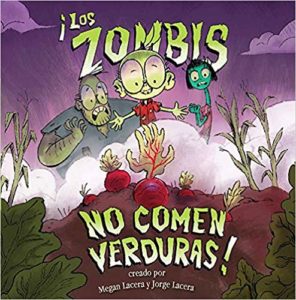
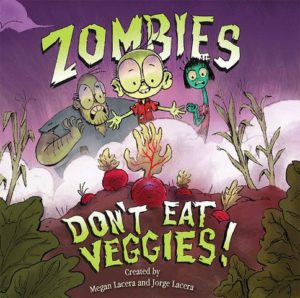 12) How did you come up with the idea for Zombies Don’t Like Veggies! Anything in particular that inspired it?
Megan: I really wanted to do a zombie story.
Jorge: When I heard “zombie,” I was in. That’s all it took.
Megan: I had an idea for a character who was a zombie but was more “refined” than other zombies. And maybe he didn’t buy into all of the things that zombies were supposed to do. I imagined that he and his family were more conscious than we typically think of zombies. They weren’t roaming the streets mindlessly. They were still a unit, still committed to each other, still capable of loving each other, even if in imperfect ways.
We were also inspired by our son (he’s now six) who really loves creepy things like vampires, monsters, and zombies. Most kids do! But there are so few things for young kiddos that let them play with these kind of characters. So we wanted to do something that kids like him could enjoy.
Jorge: PS, he’s also a notoriously picky eater. We thought if there were a story about a zombie who actually loved vegetables, he just may try them. And he did!
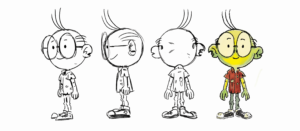 13) While working with a topic like zombies for a picture book, was there anything in particular that challenged either of you?
How far could we push on the concept without pushing kids and their adults away?
Jorge: The character designs took many iterations. They had to look like zombies, but still be appealing and friendly-looking. Too cute and kids didn’t respond. Too gory, and adults didn’t feel good about sharing with their kids. It’s a tricky balance.
Megan: Food is a huge theme of the book. There are a ton of puns. Some were just too much, too gross and had to go…we still shed tears for those jokes that had to sail away to the island of lost words.
14) Was ZOMBIES your first picture book idea?
Megan: No. Jeez, what was the first one?
Jorge: I think it was SYDNEY’S GOTTA PEE.
Megan: Oh wow. Yes. It was about a kid who was potty training and her dad.
Jorge: The kid kept forgetting to communicate that she had to go to the bathroom until the very last second and the dad was always racing around like a maniac to get her to the bathroom on time.
Megan: Yep. The stakes were high.
 15) What was the process like working with Lee & Low books, the largest independent children’s publisher focusing on diverse stories? How did their mission and their own staff impact the Latinx aspect of Zombies Don’t Eat Veggies and how it evolved and ultimately ended up being told?
Our experience with Lee & Low has been wonderful. We’ve found them to have a great deal of integrity—they really do believe in their mission and are committed to achieving it. Diverse stories aren’t a trend or “a nice to have” for them…it’s the foundation of their company. We feel very lucky for ZOMBIES to be with them.
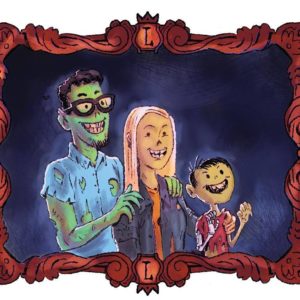
The Latinx aspect of ZOMBIES has always been central to the story. We modeled The Romeros after our own multi-ethnic family (surprise! We’re actually zombies-hold onto your brains).
Jorge: I was born in Colombia. I immigrated to Miami (which is such a mix of cultures—I took for granted growing up with immigrants from Cuba, The Dominican Republic, Ecuador, etc) with my parents when I was pretty young. I speak fluent Spanish in addition to English. My mom and dad–Kai’s Abuelos–speak primarily Spanish.
While Megan and I speak predominantly English at home, we do mix in Spanish, especially if we’re Skyping with my parents or other relatives. Megan has picked up a bit of the language and will use it when she can. We mix Latinx foods like empanadas, arepas, pan de bonos with pizza, gnocchi, and salads. We’ve noticed that there are a lot of families like ours…those who are a blend of cultures and languages. We really wanted more picture books to reflect that. And why not a book about zombies?
Megan: Our editor at Lee & Low (Jessica Echeverria) really understood what we are doing from the beginning. Her offer letter to us was amazing…one of those moments where it felt like everything was lining up in the universe! She too grew up in Miami and is Latinx. She loves classic horror stories like we do. She’s funny and thinks zombies in picture books have a place. It’s really just an example of the right partners coming together for a project. We know this doesn’t always happen, and we are just so fortunate to have this experience with our debut book.
16) I see you’ve infused the book with Spanish. As a Latinx creator myself, something I’ve had trouble figuring out is how to create a book written primarily in English while infusing the story with a secondary language. Any tips for how to do this, and in a way so the infused language flows while still feeling authentic?
We listened to ourselves a lot. When do we use Spanish? How much? What words come up again and again? Try recording yourself talking sometime.
Jorge: It’s also about the characters. Why are they infusing the secondary language? What purpose does it serve? That should help guide you. Avoid randomly putting in Spanish words for “flavor.” Make them intentional.
Megan: For another example to investigate…we love the movie Spider-man: Into the Spiderverse. Miles Morales and his family use both English and Spanish in an authentic way. PS, if Chris Miller and Phil Lord are interested in the ZOMBIES DON’T EAT VEGGIES movie, let’s talk See the next question….
 17) I recently learned that Zombies Don’t Eat Veggies is part of a two-book deal… congrats! Megan, I read that you a vision of sorts for things you’d love to see happen for Zombies Don’t Eat Veggies: a tv series, plush toy, app, clothing, etc. Is that something, especially with the experience that both of you have, that you’ve planned out and/or spoken about with your agent and/or other parties? And if so, can you shed some light on how you approach that and with whom and when?
Thanks! Yes, the two-book deal was part of that amazing offer letter from Jessica. She told us that it’s the first two book deal for picture books. We were blown away! We’re already deep into working on book #2. It’s not a sequel to ZOMBIES (that may come too)—it’s a story about friends and the lengths they’ll go to in order to save their home.
Megan: Regarding movies, toys, etc….It’s super early, but we have started really rough conversations with John about a ZOMBIES DON’T EAT VEGGIES! movie. We have ideas for expanding the story and we think the world is ready to embrace The Romeros in multiple ways.
Jorge: We also have ideas for a toy line (based on the quirky foods we created for the book) and a story + game app. All of this starts with us getting the concepts down, talking with John, and finding partners who can help us bring our concepts to life.
John has a great video on the subject of books to movies…check it out here:
https://www.youtube.com/watch?v=Ylrbh6vNdws&t=65s
18) Jorge and Megan, do you feel Latinx culture is something you intuitively bring to your work, or do you consciously infuse it into the work? Or both?
For ZOMBIES, it was definitely conscious. Again, it’s really the story of our family which is a blend of cultures and backgrounds.
19) What’s some advice each of you might give a debut picture book author leading up publication?
Megan: Learn more than writing! When you’re at the beginning, focus on craft, do everything you can to grow, evolve, get better at this core skill. In fact, making growing in your craft a part of what you do every day. But beyond that, our experience says that to stand out and make a career out of books, you have to learn about marketing, branding, public speaking and business. If you’re imagining that you spend all day writing and everyone else takes care of “the rest of it,” you may be disappointed.
Jorge: I mentioned to the amazing Charlos Santoso that I was freaking out about our book coming out. He told me to relax and enjoy the process, all of it. It’s easy to get stressed and overwhelmed because there is a lot to learn and a lot to do. Talking to Charles helped me to take a step back and remember to take time out and appreciate everything that’s happening.
20) Megan, I was reading the transcript of a kidlitwomen podcast in which you said, “At some of my jobs in the past, I’ve always taken on things that are little holes that somebody else isn’t doing just so I can learn it and I think it makes us more well-rounded people.” What are some of those little holes the both of you fill pretty consistently? Any tips for authors and/or illustrators on what holes they might expect to fill and how they might fill them.
Megan: One example from years ago….I was the editorial manager at a retail company. Several people left after the company went through a sale and reorganization…while those roles were open, I offered to take on parts of the responsibilities. One was overseeing product photography—I learned a great deal about photo shoots, lighting, and project management. I also dug into the printing process to understand costs, timing, potential issues that affect the look of prints. I also became way more involved with digital marketing, email campaigns, the website, and more. Not all of these things were exciting to me—but they started me on a journey to learn more about marketing, management, and budgeting. From there, I was actually able to move into more marketing + creative roles at companies which made me more hirable and able to make a greater impact. It also made me much more aware of the actual business and financial value of the creative work.
As a creator, now I’m able to do a lot more with my own book marketing and branding. I can determine budgets and processes for achieving the goals of Studio Lacera. I understand the business of stories and can be an active partner in getting where I want to go.
Jorge: There is so much education available now. You can take courses and universities and academies, and you can also find a ton of stuff on the internet, free of charge. If you’re a writer, talk to more illustrators. If you’re an illustrator, talk to more writers. Look at books critically to evaluate why they work (or why they don’t). Take a course on the business of publishing. Find something on entrepreneurship, because if you’re going to make a career out of this, entrepreneurial skills will help. Listen to podcasts from people doing things you’re interested in. Read, read, read. Also, talk and listen to more kids! What are kids interested in today and why? If you’re only reference is yourself as a child, you may not be tuned into how kids are talking, playing, interacting now.
Link for reference:
WILDCARD Questions:
What’s your favorite zombie film?
Jorge: Dawn of the Dead
Megan: 28 Days Later
Favorite vegetable. Least favorite?
Jorge: Favorite – Zucchini Least favorite: Iceberg Lettuce
Megan: Favorite – Spinach. It’s so healthy and you can put it in smoothies! Least favorite — Cauliflower
Check out the TRAILER for ZOMBIES DON’! EAT VEGGIES!
Thank you for your time, Megan and Jorge!
Sorry, the comment form is closed at this time.