

December 16, 2018 Interview with Agent Adria Goetz of Martin Literary Management
1) What’s a day in the life of literary agent Adria Goetz like?
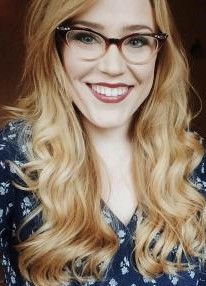 I primarily work from my home office, which is about an hour south of Seattle in a Victorian farmhouse built in 1890. I wake up and have a cup of coffee with my husband Alex every morning before he leaves for work. Once he leaves, it’s pretty quiet around the house—just me, my cats, and hopefully a few friendly Victorian ghosts. (Though I unfortunately haven’t crossed paths with one yet.) I begin my day by catching up on emails, sorting any submissions that came in over night between two folders: “Queries – Maybe” and “Queries – No,” then spend the rest of the morning working on any book proposals or line edits that need work. If anything like an offer or a contract comes in, I’ll drop everything to tend to those top priority items. At 11:00 I take a much-needed dance break (typically Ariana Grande, Beyonce, or Taylor Swift) to get out of my head. So much of being an agent is critical thinking, and sometimes your brain needs a break! In the afternoons I’ll often go to a coffee shop to work for a few hours. Then toward the end ofmy day, I try to carve out time for reviewing submissions. Sometimes I’ll go to the gym and read on the treadmill, but more often than not it’s back at home where I can be cozy. Once the clock strikes 5:00, my office magically turns into my “writing studio” and I write until dinner time.
2) If you could hit the fast forward button on your career – whether it be months or even decades from now – what accomplishments would you like to see under your belt as an agent?
By the end of my career, I’d love to see some of my books hit the NYT Bestseller List, win a Caldecott, and a Newberry. The awards are pie in the sky, but a girl can dream, can’t she? I’d also like to feel a general sense of pride of the books I helped usher into the world, and feel like I was a passionate champion for diverse voices and for books that I think kids will genuinely love.
3) What’s something you as an agent face that’s especially difficult or frustrating that writers may not know?
Sometimes the critical thinking element of the job can be draining. I’ll read a submission and like the writing and the premise but something about it feels off and needs developmental work, and if I can’t put my finger on the specific element that needs work then I pass on it because I always want to feel like I’ll be able to guide a project in the right direction. I consider myself an editorial agent, so it drives me nuts when I love a project that comes in the door but just don’t have the editorial vision for it. When this happens, I try to accept the fact that I just wasn’t the right agent for the book.
4) What do you love most about working within children’s literature?
There is so much magic and delight in creating books for kids.
5) What three things are at the top of your #MSWL.
Magical picture books, a diverse YA Rom Com, and a food-related graphic novel.
6) You mentioned you love atmospheric setting-driven books where the author has created some rich world-building. Can you give us an examples of some books (or authors) you feel have accomplished this especially well?
Truly Devious by Maureen Johnson is a perfect example. There are like 40 pages in the first half of the book that are solely descriptions of Ellingham Academy and I savored every single word.
7) What are some recent middle grade titles that you’ve especially enjoyed or are in the same vein of stories you’d like to be queried with?
FRONT DESK by Kelly Yang and GREENGLASS HOUSE by Kate Milford.
8) I see you’re seeking board books through young adult literature, adult nonfiction projects, and everything under the Christian umbrella. Do chapter books fall anywhere into that list? And if so, what are you seeking for that audience?
Yes! I’m extra picky when it comes to chapter books though, because they can be tough sells. In my mind, chapter books can mean a lot of different things and they still feel like the Wild West to me. That said, I’d love a spooky chapter book series, like something mystery-based.
9) I hate to use the word “trends”, but here goes… I was reading a Twitter thread by your colleague, Clelia Glore [For those who may not have read it, Clelia spoke about how publishers have overbought traditionally-told picture book bios. She then discussed what types of picture bios could sell in today’s market.] Are you noticing any other trends within the picture book market?
My favorite presentation to give at conferences is “Current Picture Book Trends.” I could talk for hours about picture book trends.
The biggest thing I’m hearing editors ask for is stories told from diverse voices. I’m always hesitant to describe this as a trend because it isn’t just a trend—it’s a new direction the industry is heading toward. Everyone is hungry for stories that haven’t been heard before—not because these stories weren’t being told, but because the industry wasn’t listening! But the industry is all ears now, and I think that’s exciting. I’m particularly hearing editors wanting what I’ve head described as “casual diversity.”
I’m also hearing editors ask for spooky stories, tons of nonfiction, STEM-forward books, girl power, LGBTQ characters, books that have heart but aren’t didactic, and humor. I think everyone wants some levity right now in the content they consume, whether that be books, movies, music, TV shows. So I’m hearing a lot of editors ask for lighthearted, funny, delightful books with heart.
10) Any words of advice for picture book writers who aren’t illustrators and don’t really write non-fiction (which seems to be in high demand right now)?
Write a story that an illustrator would love to get their hands on. Something that could have dazzling visuals.
Even if you don’t write non-fiction, you might think about adding in some sort of nonfiction thread. Adding in an author’s note at the end, a recipe, or some bit of back matter or real world tie-in could help increase its salability. But, keep writing what you love to write!
11) You shared that when considering a potential client you need to determine whether you have the right contacts to be the best advocate for them. Any advice for how authors can determine during the querying process whether an agent might have the right contacts for them and their work?
Look to see if the agent is selling books that you feel are similar to yours. That seems like basic advice, but it will help! Agents want to represent books where they feel like they know exactly who to send the project to. The first picture book I sold was called RICE FROM HEAVEN by Tina Cho, set in South Korea, about a young girl who joins a group of people who fill these ginormous balloons full of rice and float them over the border into North Korea, with the hope that they’ll provide meals for starving families there. Because this was my first picture book, I felt like I got a specific sense for who was excited about Asian-specific voices, nonfiction-based stories, projects with a global scope, and writing that has a lyrical bent to it. It paved the way for me to represent Ching Yeung Russell, a wonderful author who wrote a MG novel-in-verse called HOUSE WITHOUT WALLS, about the Vietnamese Boat People Exodus in 1979. The same editor who acquired RICE FROM HEAVEN, Sonali Fry, acquired this book as well. I’ve sold two other projects by Tina Cho—one book about Korean holidays and traditions called KOREAN CELEBRATIONS, which publishes with Tuttle in 2019, and a picture book called THE OCEAN CALLS about the haenyeo—which are these older Korean women who free-dive for sea life to provide for their communities—which publishes with Penguin Random House’s new imprint Kokila in 2021. So if anyone has a nonfiction-inspired story based in an Asian country, I apparently have the right set of contacts for those types of projects!
12) I was reading about your 5 in 5 rule [http://kathyide.com/guest-post-adria-goetz-my-5-in-5-rule-for-evaluating-submissions/]. What are some of the factors that determine which editors you submit to and the strategy you take when submitting to them?
I keep an ongoing spreadsheet of what editors have told me they’re looking for, so I’ll pore over that when I’m putting together a submission list. I’ll also prioritize editors who I’ve worked with in the past, because there’s a better chance they have similar tastes!
13) In a query letter, do you have a preference regarding whether the author first dives into the pitch or a short personalization about why they specifically chose to query you?
I think a short personalization is always nice to read.
14) What’s your average response time to a query? To a partial or full?
Our agency tries to respond to every query we receive within two weeks, in some capacity. When I’ve requested a full manuscript to read, I try to give the writer a sense of when I’m aiming to respond to them by, and often I’ll give them a specific date to follow up with me if they haven’t heard back yet. If I’m going to take longer on something, sometimes I’ll update them or even tell them what page number I’m on, to give them a sense of where I’m at in the story.
15) Aside from a particular manuscript or even the work itself, what qualities in an author might fill you with excitement at the thought of working with them?
The two qualities I look for the most are kindness and savviness. Before signing a client, I try to suss out whether they are, or aren’t, a kind person. I need a certain level of warmth in the people I work with! I also try to suss out whether they are savvy about writing as a craft, the current market, the industry, etc. Seeing that someone is actively involved with SCBWI, particularly in a critique group, is a draw for me as well. I want my clients to continue to go to workshops, writing events, conferences, and so forth, even after they’ve signed with me or scored their first book deal.
16) In your opinion what makes for a successful author-agent relationship?
Trust, transparency, clear communication, friendliness, warm fuzzies, and healthy boundaries.
17) What’s your communication like with clients?
I like to communicate primarily over email, which is probably very millennial of me. I’ll call my clients when an offer comes in or we need to discuss something more important or nuanced. I’ve also just started a new tradition of “toasting” my clients over Skype or FaceTime once we’ve finalized a deal. Typically we just toast over a mug of coffee, but it still counts!
18) What level of contact do you maintain with your authors during the acquisition process? Does it vary according to the author and their wants and needs?
I strive to be as communicative and transparent with my clients as possible. They typically know as much as I do. I create a submission spreadsheet using Google Sheets which shows them which editor I’ve submitted to, which publisher they belong to, and any relevant notes, so they can see what’s happening in real time. It’s also color-coded! There’s a light color for when the submission has been sent, a dark color for if passes, and a golden beam of sunshine for if/when an editor has made an offer.
Some clients eat up every morsel of feedback that an editor provides, and other clients take feedback and critique very personally and get their feelings hurt, so I do try to protect feelings, especially if I get the sense that they’re more sensitive. I hold back comments if they’re only negative and not constructive.
20) Are there any upcoming conferences or twitter events you’ll be participating in?
In 2019 I’ll be at the Florida Christian Writers’ Conference, Mount Hermon, the Seattle Writing Workshop, and SCBWI WWA’s spring conference. I’ll also forever be lurking at hashtag parties like #PBPitch, #DVpit, #FaithPitch, #PitMad, and all the others.
WILDCARD QUESTIONS:
What are three personality traits you would use to describe yourself?
Creative, innovative, and enthusiastic.
Would you rather speak any language fluently, or be able to talk to animals?
This is officially the hardest question I’ve ever been asked in my entire life, but after deep consideration, I think I’d want to speak any language fluently, because it would make international travel a breeze. I do dream about having conversations with my cats, Maple and Mulberry though.
If you could spend a day with any person, living or dead, who would it be?
Taylor Swift.
Sorry, the comment form is closed at this time.