

October 3, 2019 Interview with Agent, Charlotte Wenger
I’m excited to welcome to the blog this week, agent Charlotte Wenger!
About Charlotte:
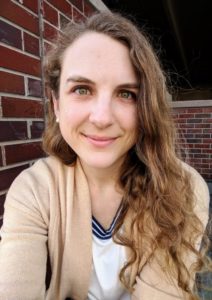 Charlotte Wenger is a literary agent in the Boston area with Prospect Agency. Prior to joining Prospect, she was an associate editor at Page Street Kids. She has her Master of Arts in Children’s Literature from Simmons College (now University) and serves on the national advisory board of the Mazza Museum, the world’s largest collection of original artwork by children’s book illustrators. Charlotte is drawn to children’s literature and art for all ages—board books through YA, but especially picture books.
Connect with Charlotte:
Twitter
Prospect Agency bio
Manuscript Wish List profile
Submissions
Website
Justin: Okay, shall we dive into some questions?! Let’s begin with two truths and a lie. What are two truths and a lie about you, Charlotte?
Charlotte:
- I’ve met Desmond Tutu.
- I have four tattoos.
- I’ve never read the Twilight series.
Justin: (The answer is listed underneath the final answer to the wildcard questions at the bottom of the interview)
Justin: You’re someone whose love for children’s books shines bright – you seem to surround yourself with them. What is it about children’s literature that excites and energizes you most?
Charlotte: Thank you! Books can be formative for people no matter their age, but I love that children’s books are created especially for kids, who, in my opinion, are much more open-minded, imaginative, and curious than most adults are. That makes a children’s book’s potential impact that much more meaningful. As cliché as it might sound, kids are our future, so to play even a small part in getting books into kids’ hands impassions me.
Charlotte: How did you come to join Prospect Literary Agency?
Justin: When I was an editor, I had the pleasure of meeting Prospect agent Rachel Orr in 2018 at Whispering Pines Writers’ Retreat, where we were both on faculty. As I was considering transitioning from editor to agent, I talked with several agents I had met who had also made the change, and Rachel was one of them. I was able to meet up with her in NYC, and after what turned into a wonderful 3+ hour conversation, Rachel invited me to join Prospect. I love Prospect’s emphasis on community and relationships, passion for the industry, and mission to “see the forest and the trees.”
Justin: How has your previous work as an editor influenced your agenting and process and the work generated with clients?
Charlotte: I’m still definitely doing editorial work as an agent. I provide editorial feedback for my clients and work on revising with them until we both feel a story is ready to go out on sub. I do developmental edits as well as line edits, depending on what shape a story is in and what’s most helpful for each individual client. I have also found that editors really appreciate the fact that I used to be an editor because I know what it’s like to be on their side of the desk, so to speak.
Justin: What do you perceive your strengths to be as an agent?
Charlotte: I believe my strengths are communication, my academic and editorial experience with children’s literature, my passion for building relationships, and my organizational skills.
Justin: When it comes to children’s literature, what audience and genre(s) would you consider your sweet spot?
Charlotte: Given my editorial experience with picture books, I’d say they’re my sweet spot. Picture books are meant to be a shared reading experience between a child and an adult, which is one of my favorite things about them. The child audience ages for picture books typically range from about 4 to 10 years old, and through nannying and babysitting, I’ve spent quite a bit of time with kids those ages, so I feel like I have a good understanding of what would resonate with them – as well as the adults in their lives.
Justin: Are you seeking or open to chapter books, and if so, what are you looking for?
Charlotte: Yes, I’m seeking all children’s lit. age ranges – board books, picture books, beginning readers, chapter books, middle grade, and young adult. I’m also open to adult memoirs and biographies. My MSWL profile and tweets are probably the best place to find more specifics within each of those categories regarding what I’m on the lookout for.
Justin: As an editor, you’ve been a frequent participant of Twitter pitch contests. Will that remain the same now that you’re an agent?
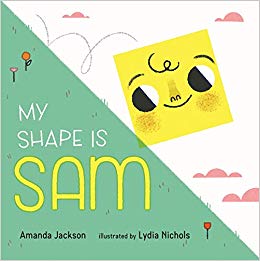 Charlotte: Yes, absolutely! Twitter pitch events are a wonderful way to discover people’s work. As an editor, I was able to find some great manuscripts through Twitter pitches that I ended up acquiring, and I’m excited about the possibility of connecting with people I might end up representing as an agent. Fun fact: While I was an editor, I acquired Amanda Jackson’s MY SHAPE IS SAM from her Twitter pitch, and I now represent her as an agent!
Justin: While I’m at it, what catches your attention in a Twitter pitch?
Charlotte: I actually have a workshop I sometimes do at conferences on crafting strong Twitter pitches in which I talk about this! So without going into detail, I’d say Twitter pitches that catch my attention include key character(s), voice, obstacle, and context.
Justin: When you receive a manuscript from a querying author, what are you looking for in that manuscript? Are you open to taking on an author with manuscripts that have strong potential but need some work, or are you looking for polished stories nearly ready to go out on sub?
Charlotte: I look for a strong voice, distinct characters, a solid story structure, and an ending with impact. Typically, it would be great if the person has several polished stories, because that means we can start getting their work out on sub more quickly, but I’m also happy to work on stories with strong potential that need some developmental or editorial help before they’re ready to be shared with editors.
Justin: When considering a client, how do you decide whether you’d benefit a potential client by becoming their literary partner? What are you taking into consideration?
Charlotte: After I read their initial submission, I typically ask to see more of their work and/or request a revision. It’s important for me to be excited about representing a person’s body of work long-term. I also want to get a sense of how my editorial notes land for them and see what they do with my feedback. Before I offer representation, I like to have a phone call with them so we can talk about goals and get a sense of whether or not we could work well together.
Justin: Are there any upcoming conferences or twitter events you’ll be participating in?
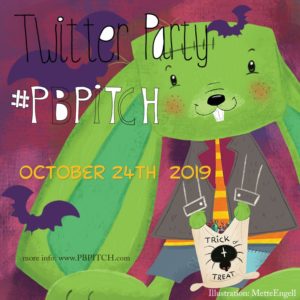
Yes! I will be at the Central-Coastal California SCBWI Writers’ Day on October 12 and participating in #PBpitch Twitter pitch event on October 24. I’ll also be on faculty at a to-be-announced writers’ retreat in early November and part of a critique event at the Writers’ Loft on November 9.
WILDCARD QUESTIONS:
Justin: If You Knew You Could Not Fail, What Would You Do?
Charlotte: Perform on Broadway
Justin: What is your favorite smell and why?
Charlotte: The ocean. The smell is both invigorating and sentimental for me because I associate the beach with rejuvenation and family tradition.
Justin: Charlotte’s lie for ‘Two Truths and a Lie’ was her response, “I have four tattoos.”
Justin: Thanks for your time, Charlotte!
Sorry, the comment form is closed at this time.