

June 29, 2020 Interview with KT Johnston
I’m excited to welcome to the blog this week, author KT Johnston!
About KT:
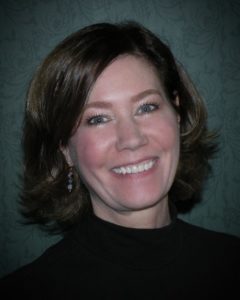 KT Johnston writes historical narrative nonfiction. KT’s interest in the past developed from a sweeping curiosity about the way things were and how history has impacted the way things are. She enjoys feeding her interests by traveling, whether she’s touring a historical site, experiencing a foreign land, or mind-wandering in a good book. Born in Minnesota, KT earned a degree in biology and conducted wildlife studies before settling into a corporate career as an analyst. KT hopes to inspire others to be curious about our world as well, one true story at a time.
Connect with KT:
Website
Twitter
Facebook
Please tell us about your debut book, Railway Jack: The True Story of an Amazing Baboon.
RAILWAY JACK is the true story of the remarkable partnership between a man and a baboon in 1880s South Africa. When railway inspector Jim Wide lost his legs in an accident, he had to find clever ways to get around and perform his work. He obtained a very unusual helper: a baboon named Jack. But not everyone was happy to see a baboon at the rail yard signal hut, and Jim was fired. He pleaded with the authorities to give Jack a chance and they agreed to a test. Jim and Jack’s futures lay in the hands—er, opposable thumbs—of a baboon!
This inspiring story celebrates the history of service animals and a devoted friendship.
Who might this story appeal to?
RAILWAY JACK should appeal to animal lovers, disability advocates and history buffs. It should appeal to older reluctant readers, younger children reading up, littles being read to, and the grown-ups reading it to them. Its upper elementary/lower middle grade reading level is also ideal for English Language Learners of any age.
What inspired and/or motivated you to write it?
My inspiration for writing comes from ordinary animals who had a profound impact on a person’s life; stories from one-half century or more ago that are barely a footnote in history, but left ripples that can be felt on humanity today. Jack’s story hit all the notes.
When and how did you first learn about Jim and Jack? What prompted you to research them further?
I follow history-related sites as a personal interest and an article about Jack flowed into my Feed one day. When Jack repeatedly popped up in my thoughts over the next few days, I knew I had to tell his story. I started with a quick internet search to see if it had already been told and if there was enough contemporary information for an authentic story line. Snippets of plot started floating around in my mind and I knew I was in it for good.
I find it fascinating that you have a degree in biology and conducted wildlife studies before settling into writing historical nonfiction. How did that come about, and how, if at all, has your background influenced your research and writing process?
When I made the decision to leave wildlife studies for a “steady” corporate career, I knew I would always be able to enjoy wildlife and nature as a hobby. Roll forward about twenty-eight years. When my kids fledged the nest, I felt my anchor had pulled loose. I felt empty and went looking for myself, for something to pour my energy and thoughts into that would be fulfilling. I had an idea for a story and set off researching and writing. I got all the way to The End, proving to myself that I could do it. And I had enjoyed doing it. After finding out novella-length manuscripts by debuts are unmarketable(!), I committed myself to a new full-length project; a story which, like Jack’s, I’d run across and hadn’t let me go.
At some point I was trying to remember the name of my high school Creative Writing teacher, and on the hunt for my transcript in a box of high school memories, I found a stack of stories I’d written and forgotten about. I was struck by how many of them were about animals! So I guess writing and what I write about have always been there, waiting for me to come back. Which influenced which? Ahh, that’s a question Descartes might have to help with.
Who were the team members you worked with on it and what was the process like collaborating with them?
I worked directly with my editor at Capstone on finalizing the text and back matter, and providing guidance and feedback on illustrations. She was fantastic. She’s very skilled, tactful, and knowledgeable about children’s literature. She had a clear vision for RAILWAY JACK, and most importantly, it matched mine.
What were some of the greatest challenges you faced during the creative process for this particular story?
The most challenging part of researching any story that occurred so long ago is getting my hands on primary source material, first-hand details captured in the time the story occurred. When the story had taken place in another country, add to that the logistical and possible language challenges of locating those materials.
When researching RAILWAY JACK, sometimes an internet search returned a snippet of text, so I knew something was there, but it required paid subscription or onsite viewing to access. Some media organizations are no longer around so although I learned of an article, there was no archive or anybody to contact. Books didn’t include bibliographies until early in the 20th century, so in older books there’s no way to trace authors’ sources. Some articles from that far back are not digitized or indexed, so I’m sure there were compelling anecdotes written about Jack and Jim I never learned of.
What was the overall timeline like for this story, from your inception of the idea to publication?
From the time I ran across Jack’s story until publication day, it was just over 2 years. I spent four months researching, drafting, getting feedback from Beta readers, editing, and polishing. I sent a handful of queries resulting in a couple rejections, and the rest probably languished on slush piles. I didn’t know what to do with myself when Capstone requested the manuscript within about an hour! They made an offer six weeks later. From contract to publication was 16 months.
What type of discussions might this book serve as a springboard for?
Ahhh, so much! Perseverance and determination, creative solutions, human/animal companionship, society and disability throughout history, wildlife in captivity, service animals, even natural animal behaviors vs. anthropomorphism.
Children’s biographical and historical books are almost always about famous people and famous events. RAILWAY JACK is instead about an ordinary animal who made an extraordinary impact on an everyday person who was just like the rest of us.
And if you want to go deep LOL, history is important because it provides a point of reference for interpreting the world today. The degree to which a child feels a story affects the degree to which it will stick with them. I hope my stories will help children connect the base concepts of past and present, and perhaps someday, correlate that relationship to the possibilities of the future.
What was your research process like for this particular story?
Research is a lot like sleuthing: the hunt for clues, running out leads, and finding people who might have additional information for the story.
I tried to locate material that was written as close to the time and location of the story as possible. I started with internet searches and gathered articles, books and photographs from my library and the library at the university. I found some old publications in Google Books. I even contacted the reference desks at The British Library and the National Library of South Africa for copies from defunct journals, and reached out to a couple of museums in South Africa for any materials they had.
Particularly cherished, I found two men with direct relationships to the story! In the back of RAILWAY JACK is a photo of Jack and Jim from the family scrapbook of one of them. I had run across his Letter to the Editor in the journal Nature, written in 1990. He was correcting something they’d had in their “From the Archives” section about a story they’d run on Jack 100 years earlier. A different article in my research mentioned the man and told of a family connection. It turns out his great-great uncle had known Jack and Jim! The byline of the man’s Letter to the Editor included his position at a Canadian university. After nearly 30 years, I didn’t have high expectations of finding him, but even so, I searched their website and found he had transferred to a university in England. A search of that university’s directory revealed he was still on faculty(!)—and it listed his email address. He graciously replied to my inquiry and was happy to dig out some things from his family’s papers. I found the other man through an article as well, published much more recently though, and finding him was more straightforward. He had been involved in restoring the old train station where Jack and Jim had worked, and from him I was able to learn more about the station and Uitenhage today.
Any research tips and/or tricks for fellow authors?
I have a gather phase and a process phase to my research. Of course they overlap as new threads of story pop up, but generally I grab all I can find first. From this skimming, a story arc starts forming in my head. Each article, photo, etc., I file electronically with the date first (yyyy-mm-dd) so they sort in date order.
Then I go through the articles and glean details into a spreadsheet: facts down, articles across. To tell the most truthful story I can, I want to be able to corroborate details with contemporary material or other reliable sources, so by going through the material in date order, I’m finding the earliest mention of a fact. If there are no new facts in an article, it gets moved to another folder, so I’m organizing my bibliography at the same time.
Another tip? Capture what you need for a bibliography as you go along. Capture the link where you found an article and in particular, note the date you accessed it. It’s hard to re-create that later.
Is there anything you’re currently working on and would like to share with us?
Book 2 has been purchased by Capstone as well, slated for Fall 2021. I hope the date will stand given these crazy times. While RAILWAY JACK is about an early service animal, Book 2 is about an early therapy animal.
Books 3 and 4 are also underway, and there are many others squirming for their turn.
Thanks for your time, KT!
Thank YOU, Justin!
Good luck on your NYC callback opportunity. I hope it will be rescheduled!
Sorry, the comment form is closed at this time.